Every spring, three dates decide what your tea costs and how it tastes: 清明 Qingming (around 5 April), 谷雨 Grain Rain (around 20 April), and 立夏 the Start of Summer (around 6 May). Chinese tea is bought and sold against that calendar. In Europe and America the same leaf is sold against a grade — “premium”, “first flush”, “AAA” — which tells you far less.
Grain Rain is the middle one, and it is the one most often misused in English. It is not a quality tier. It is the last week in which the bush is still growing like a spring plant: cool nights, slow cell division, high amino acids, low fibre. Two weeks later the same bush is producing a completely different raw material.
Qingming: the small, expensive window
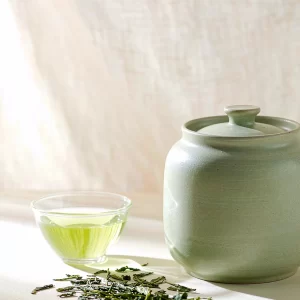
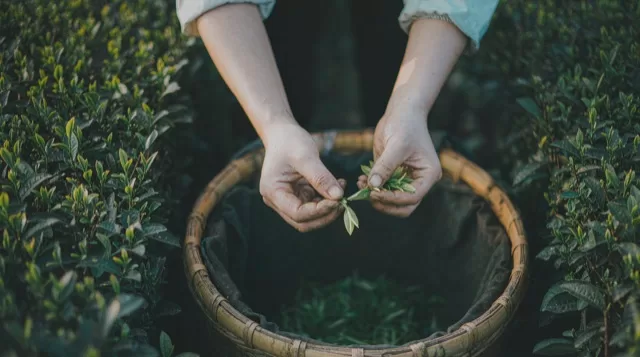
Pre-Qingming (明前) is picked in the ten days or so before 5 April. Growth is slow, the yield per bush is a fraction of what it will be, and the leaf is tiny — one bud and one leaf, sometimes just a bud. Amino acids are at their peak and catechins are low, which is why the cup is sweet, soft and almost savoury, and why it can be brewed in a glass at 80 °C and still taste like something.
It is also fragile in both directions. A late frost in those ten days can take an entire lot; a warm spell can push the bush past the window in three days. That is most of the price difference you see between 明前 and everything else — scarcity and risk, not a hidden quality.
Which is the point worth holding on to: pre-Qingming is a time window, not a guarantee. A badly withered, badly fired Mingqian tea is worse than a well-made Grain Rain tea, and it happens every year.
Grain Rain: the leaf catches up
By Grain Rain — the fortnight before 20 April — the plant has had sun and warmth. The leaf is bigger, the yield triples or more, and the price falls by half. What changes in the cup: more body, more aroma, a little more astringency, and a noticeably longer finish. For green and white tea this is where most of the flavour per dollar lives.
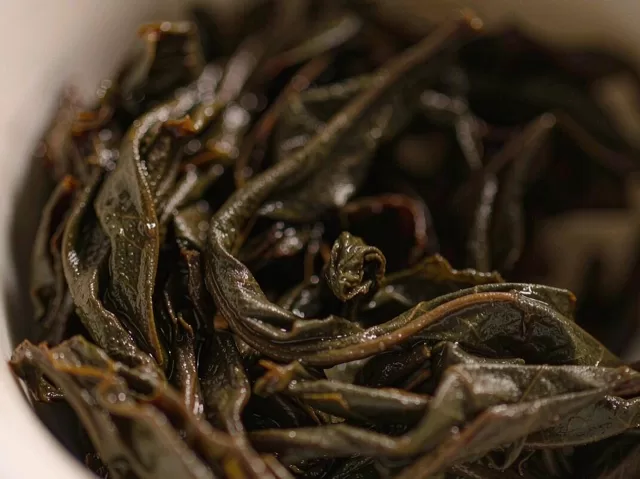
For oolong and black tea the picture inverts. Those teas are not made from the youngest leaf, because the youngest leaf has too little structure to survive shaking and roasting — it collapses. Oolong wants the mature leaf, and the season for that starts at Grain Rain, not at Qingming. When a vendor offers you a “pre-Qingming Tieguanyin”, what you are being sold is either a green tea with an oolong name or an oolong made from leaf it should not have been made from.
The calendar, in one list
- 明前 · before Qingming (~5 Apr) — green and white tea. Small, sweet, expensive, fragile. Buy it for the experience, not the habit.
- 雨前 · before Grain Rain (~5–20 Apr) — the sweet spot for everyday green tea. Most of the Longjing and Bi Luo Chun worth drinking lives here.
- 谷雨到立夏 · 20 Apr – 6 May — oolong and black tea begin. Bigger leaf, more structure, more aroma after processing.
- 立夏之后 · after 6 May — summer leaf. Bitter, cheap, and mostly destined for teabags and jasmine scenting rather than for a gaiwan.
Why we print the pick date on every product
Because it is the only piece of information on a tea package that cannot be invented. Origin can be stretched, grade can be invented, “hand-picked” means nothing enforceable. But if a shop tells you the leaf was picked on 12 April, they have committed to something you can check against the weather in that county.
It also explains why two bags labelled “Tieguanyin” can taste nothing alike and both be honest: one is a spring pick from the high gardens, the other is a summer pick from a valley floor, and neither label was lying.
Grain Rain is not better or worse than Qingming. It is a different job. Qingming makes a tea you drink slowly on a Sunday; Grain Rain makes the tea you drink every morning without thinking about it, which is the harder thing to get right and the more useful thing to have.