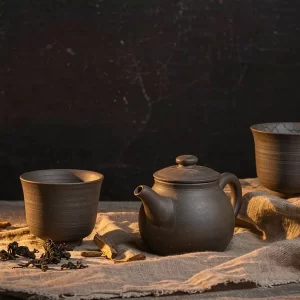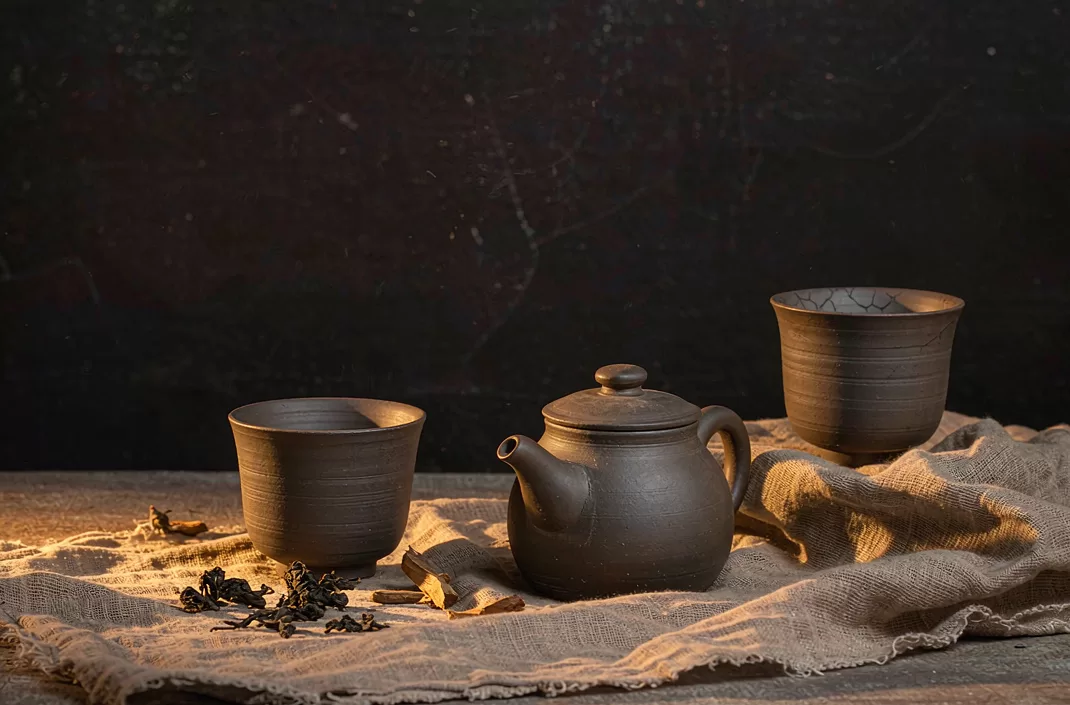
Search for “gongfu tea set” and you will be shown a lacquered tray, six thimble-sized cups, a wooden scoop, a needle, a pick, a pair of tongs and a small ceramic animal. None of that is required, and most of it will end up in a drawer within a month.
Gongfu brewing is not a ceremony. It is a method for getting more out of a leaf by using more leaf, less water and shorter steeps. The equipment exists to serve that method, and the method needs four pieces.
1. A gaiwan, 100–120 ml, porcelain
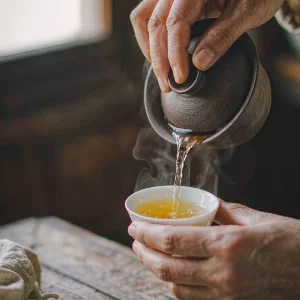
A gaiwan is a bowl with a lid and a saucer. It is the cheapest good brewing vessel there is, and the most honest: porcelain adds nothing to the flavour, it pours fast, and you can see the leaf. A hundred to a hundred and twenty millilitres is the right size for one or two people — bigger and you need so much leaf to keep the ratio that a session becomes expensive.
Two things to check before you buy. The rim should flare outward so you can hold it without touching the hot body. And the lid should sit loosely enough to be tilted for pouring — a lid that seals is a lid you will burn yourself on. Twelve to twenty-five dollars buys a perfectly good one. There is no reason to spend more until you have broken your first.
2. A fairness pitcher — 公道杯
A small glass jug, a hundred and fifty to two hundred millilitres. This is the piece beginners skip and then regret, because without it the first cup from every steep is weak and the last cup is bitter — the liquor is still extracting while it sits in the gaiwan. Pour everything into the pitcher, then pour from the pitcher. Every cup is then the same tea.
Glass, unglazed inside, no spout decoration. It also cools the liquor to drinking temperature in about thirty seconds, which is a second job you would otherwise do badly.
3. One cup you actually like
Forty to sixty millilitres, thin rim, white or pale inside so you can see the colour of the liquor. One is enough. Two if you sometimes brew for someone else. The six matching cups in the boxed sets are for photographs.
If you already own a mug you like, use the mug for a month before buying anything. The cup changes how the tea feels in your mouth far less than the water and the leaf-to-water ratio do.
4. A kettle you can control
This is the only piece where spending more genuinely changes the tea. Green and white teas want 75–85 °C; oolong and puer want a full boil. A variable-temperature kettle is the difference between being able to brew both and only being able to brew one.
If you do not want to buy one, a cheap thermometer and a kettle you already own works perfectly well — boil, wait, measure, pour. It is slower by about forty seconds and costs nothing. What does not work is guessing.
What to skip, and why
- A tea tray with a drainage hose. A plate and a tea towel do the same job. Buy the tray when you find yourself brewing every day and tired of the towel.
- Tea pets, tongs, scoops, needles. Decoration. None of them changes the cup.
- A gram scale. You need one, but a kitchen scale you already own is fine. Weigh the first three sessions, then stop — your eye calibrates faster than you expect.
- Boxed “complete sets”. They are assembled to look like a photograph, which means you pay for the six cups and the tray and get a mediocre gaiwan.
The budget, honestly
Fifteen for a gaiwan, twenty for a glass pitcher, ten for a cup, forty for a temperature-controlled kettle: about eighty-five dollars, once, and it will outlast several rounds of tea. If you skip the kettle and use a thermometer, it is forty-five.
The four pieces are not the point. They are the cheapest way to remove the equipment from the conversation, so that the only variables left are water, leaf and time — which is where the tea actually lives.